Their two-bedroom house on Ridge Avenue was already packed to the rafters with kids when, in the spring of 1962, Bill and Lorraine learned a seventh child was on the way. There was no room for another Durbin in this little house. Bill and Lorraine shared the small bedroom. Brothers Dan, Steve, Bob, and Ed were on two sets of bunk beds in the larger bedroom, with a crib between the bunks for Bill, and six-year-old Barb didn’t even get a room. She slept on a sofa bed in the corner of the dining room.
Bill and Lorraine had always planned to get a bigger house one day and now, they realized, that day had come. The only questions were where to find that house and how to pay for it. Bill’s financial gamble of taking a pay cut to work for ACIC was starting to pay off, but they still had not one dollar in savings when they planted a For Sale sign in their front yard.
Bill and Lorraine’s Black neighbors on Ridge Avenue—they were all Black by this time, save one, the Martychenkos—had grown sadly accustomed to white families’ houses going on the market. They were polite and understanding; seven kids in a two-bedroom house was tight even by ESL standards. Some of the neighbors’ kids were less polite.
Four-year-old Ed Durbin one day had to use the For Sale sign as protection against rocks thrown at him by neighbor kids who just the day before were his playmates. Protecting Ed from rocks was about the only good the sign was doing. It sure wasn’t attracting many buyers. And Bill and Lorraine weren’t getting far in their search for a new house.
Wanting to stay in East St. Louis—to both remain near family and dispel any notion they were white-flighters—Bill and Lorraine looked at larger houses all over town. But the ones in their price range were redlined. And like their current house, those bigger houses had coal-fired furnaces. It was Dan and Steve’s job, at the ages of eight and seven, to shovel coal into a stoker to keep the Ridge Avenue house warm. Lorraine couldn’t picture asking her children to tend an even bigger furnace for a bigger house. It was 1962, after all, not 1862.
Driving east out of East St. Louis on St. Clair Avenue, you have to step on the gas a little extra once you cross over Route 157 at the edge of town. That’s where the flat alluvial plains of the Mississippi River give way to wooded bluffs. The road turns into Highway 50 right about there, and the land flattens again once you get up that rise, making it just right for farming.
For a century or so, starting in the mid-1800s, that’s about all that happened above ground in these parts. Below ground, workers dug coal from a sprawling network of mines. Both the mining and farming went away in the 1950s, the former when the coal ran out and the latter when housing developers came in with offers to buy up land from aging farmers. One of those was Alvin Meckfessel. His acreage was turned into a subdivision dubbed South Bountiful Heights, and by 1962 the firm of Adams Gordon was looking for buyers for the hundreds of affordable houses they planned to build.
Their ideal prospect? Couples in East St. Louis with young children, steady jobs, and white skin. And gentiles only, too. Jews were nearly as shunned as Blacks.
Adams Gordon made Bill and Lorraine a tempting offer. They would buy the Ridge Avenue house for $4,850. That was only half what they’d paid just eight years before, but it didn’t matter. Adams Gordon would assume the unpaid balance of the mortgage. Bill and Lorraine would get back every penny they’d put into the house and not have to worry about selling it.
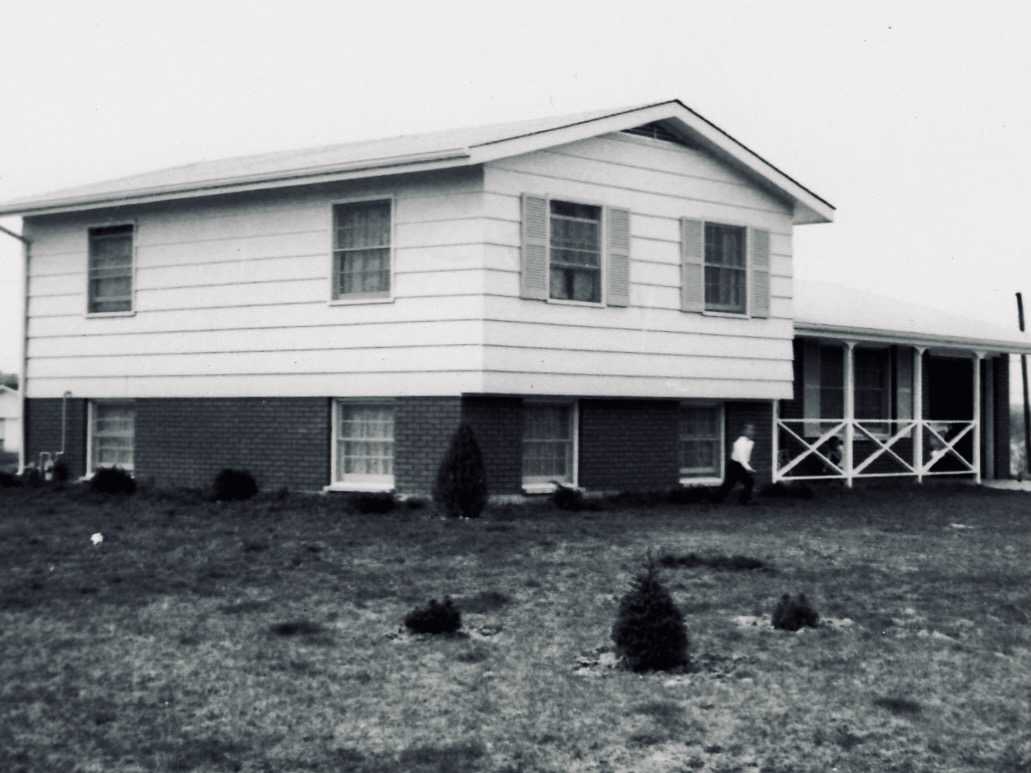
The proceeds would provide Bill and Lorraine a down payment on a new $21,000 split-level at 114 Primrose Lane, just one block from the future site of the neighborhood feature that made their kids nearly salivate: a swimming pool. The painted image of a girl diving into a pool was about the only thing they noticed on the billboard on Route 50—the sales agent said construction of the pool would begin any day. (It never would.) Barb liked the idea of having her own bedroom, and Dan and Steve loved the idea of a furnace powered by natural gas—a fuel that required no shoveling.
The only downside of accepting the Adams Gordon offer was a socially painful one for Bill and Lorraine. Fairview was a landing strip for white flight. They knew they’d be living among neighbors who did not share their views on racial tolerance, but when they took everything into consideration, they felt it was the right choice.
In 1962, fifty years after William Oscar Durbin moved his family off the farm in Dahlgren and into the city of East St. Louis, his grandson Bill Durbin moved his own family out of that once booming and now busted place, back onto farmland sprouting houses instead of soybeans.
Bill was thirty-two, Lorraine was twenty-eight, and they had a child at every age from three through eight, plus another on the way. It took an entire rainy day for Bill and his best friend Joe Levy to shuttle the family’s possessions to the new place, with each trip’s payload limited to what they could fit in the back of Joe’s truck. It was well after midnight when they finished. Bill and Lorraine unpacked just enough pans so they could make everyone bacon and eggs before heading to bed.
Next: 22. Nine Boys and a Girl
Previous: 20. The Cold Warrier
 Michael Durbin