In 1873, Marcele Sarockaite (later Marcella Kutkin) was born in Lithuania, then part of the Russian Empire (it would not declare independence until 1918). Her parents were Andriejus Sarocka and Leokadija Sarockiene, formerly Leokadija Spatkauskaite. Little else is known about Marcele’s youth, other than she would marry a Polish man named Tamosius Davlanski.
Their first child was Leo Thomas Davlanski (later Leo Davlan), born in 1897. Not long after Leo’s birth the family moved from Lithuania to Poland, home country of Tamosius, where their second child Della Davlanski (later Della Davlan) was born in 1901.
We’re not sure how they made money in Poland, but they apparently made a good amount of it. Sadly, Tamosius fell ill with tuberculosis when Della was still a baby and soon died. Marcele and the kids moved back to Jurbarkis, Lithuania.
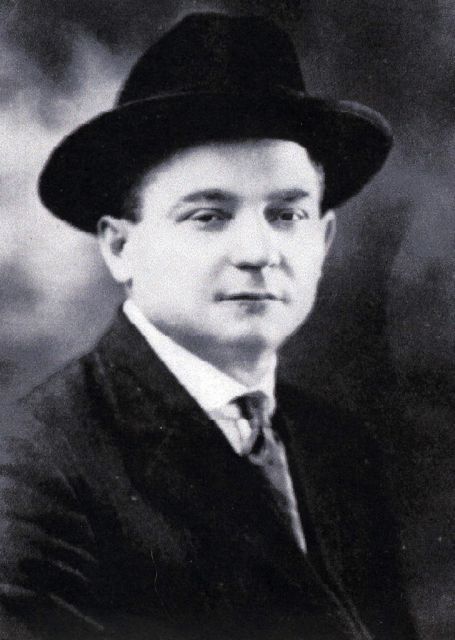
By 1905, Marcele was running a tavern in Jurbarkis, fortunate to be in a decent financial position. Unfortunately, she soon met Rokas Kutka, who married Marcele that year and helped himself to much of his wife’s money, mostly to support a serious drinking habit. In 1909 their daughter Ona Kutkaite (later Anna Kutkin, then Ann Durbin) was born. Within months of her birth, father Rokas left the family for America, where he went by the name Robert Kutkin.
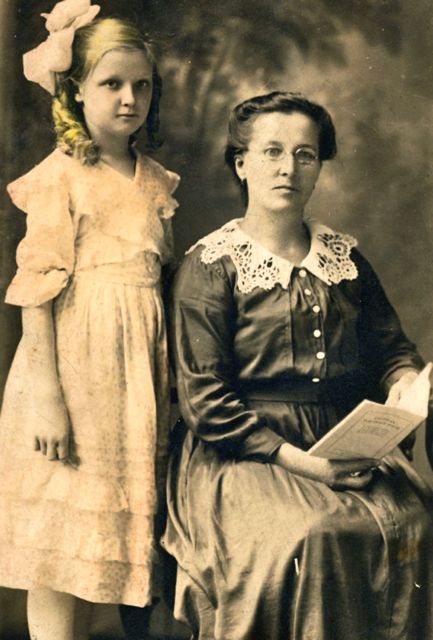
In 1911, Marcele boarded a train for Hamburg, Germany, with fourteen-year-old Leo, ten-year-old Della, and one-year-old Ona. On July 6th, they boarded the steamship Main in Bremen, carrying enough food for the twelve-day passage—none was provided on board. To avoid seasickness, Marcele would go topside at dawn to secure a stable spot on the upper deck. Little Ona, with her blond curls, was a favorite among passengers—her brother Leo would carry her on his shoulders up and down the ship.
After landing in Baltimore with her three kids and $200—the last of the family money—Marcele brought everyone by train to East St. Louis to reunite with Robert. He had no home prepared for them. For about a month, Marcella (the Americanized form of Marcele) and her children slept on the floor of a corner in a building owned by Lithuanian immigrant Sam Yociss, who provided temporary shelter to newcomers.
By 1912, Robert, Marcella, and children Leo, Della, and Anna (the Americanized form of Ona) were all living at a house on Winstanley Avenue. That’s also the year three-year-old Anna got a baby sister, Louise Lenora.
In 1915, Marcella came down with measles. Bedridden, she begged little Louise to stop crying from a nearby rocking chair. The toddler may have been in agony herself. Louise soon developed measles as well, followed by pneumonia. Marcella recovered. Her younger daughter did not. Louise died at the age of three.
Robert Kutkin worked as a molder at the Durbin Foundry on Bond Avenue—an uncanny coincidence, as there is no known connection between this foundry and the Durbin family Anna would later marry into. Robert was a valued worker, so much so that the owner’s own son would come to fetch him for work. That may have been the only way to get him there. While Robert earned good money, he apparently handed it over to saloonkeepers as fast as he earned it.
To keep her children fed, Marcella fell back on her tavern experience from Lithuania and opened one in East St. Louis. She and the kids lived in the apartment above, at 9th and Winstanley. Despite modest tavern income, their life in America was one of immigrant poverty. In winter they crowded into one room for warmth. To heat it, Marcella walked railroad tracks collecting chunks of coal fallen from hopper cars. Train crews got to know her and would occasionally toss down a shovelful in sympathy.
It’s unclear when Robert stayed at home and when he lived elsewhere. Census records from 1920 list Marcella, Anna, Della, Leo, and Leo’s wife Mary living at 1229A 9th Street. Robert is missing. At other times he seems to reappear.
When the family moved from 9th Street to 1728 Gross Avenue, they failed to tell Anna. She came home from school to an empty house and sat weeping among her schoolbooks until Leo came to fetch her.
Some of their homes had no electricity. Anna drew pictures by gaslight, sometimes choosing chalk colors that looked correct under amber flame only to discover by daylight her artwork was ruined. At night she would look toward houses with electric light and cry herself to sleep, wondering what life was like in a normal family.
Sometime between 1920 and 1930, Leo and Della shortened their last name to Davlan. Leo became the family’s defender against their violent stepfather. One legendary story tells of Leo threatening Robert with a tire iron. Robert called the bluff—until Leo struck him, opening his skull. Drenched in blood, Robert staggered to the kitchen, plunged his hand into a barrel of salt, and slapped it onto the wound to cauterize it.
As Anna entered her teens, her home became too dangerous. Robert would chase her barefoot into the night. Neighbors, aware of his reputation, would take her in.
“You have to understand I never really had a home,” Anna would later tell family. Remarkably, she managed with time to reflect on her father’s cruelty with a kind of tragic empathy. She acknowledged that Robert himself had endured a brutal upbringing in Lithuania. “What could one expect,” she once sighed, “with him having had such a terrible childhood?”
Those reflections came decades later. As a teenager, Anna focused on escape. She tried to stay in school, walking three miles to East Side High after a breakfast of rye bread and chicory coffee, without proper winter clothing. Exhausted, she dropped out and took factory work—first at a bag factory, then a cookie factory, then at Switzer’s Licorice near the Eads Bridge. She made ten dollars a week, all of which she gave to her mother.
The labor was punishing, but Anna was sharp and hungry to learn. Denied schooling, she absorbed what she could from life. In one early job as a courtroom interpreter for Lithuanian defendants, she was challenged by a prosecutor who claimed she had mistranslated. She defended herself so skillfully that the judge overruled the objection on the spot.
In 1926, seventeen-year-old Anna Kutkin met twenty-year-old William Durbin on a blind date. Details are scarce, but given all she had survived, it is easy to imagine her seeing in the gentle, upright young railroad clerk something like a lifeline. He, in turn, offered it freely.
By 1928, Anna was working as a telephone operator at Bell Telephone Company, living with her half-sister Della and husband Rudy Lenz. She hadn’t lived with her parents in years. She would later credit that job with refining her speech, telling grandchildren how she learned to pronounce “nine” as “nigh-nuh.”
That same year she married William Durbin. His parents, Oscar and Margaret—Ma and Pa—were there to join in the celebration. Anna’s parents were not. They would not be in her life much longer.
Two years later, in 1930, her mother Marcella died mid-sentence of a heart attack at the age of fifty-seven. Anna never again acknowledged her father Robert. When the city phoned around 1940 to tell her he was ill and needed help, she replied, “I don’t have a father.” They offered her his uncashed check. She declined and hung up.
Anna’s half-brother Leo Davlan and his wife Marie had three children: Leo Bernard (1921), Mary Darlene (1924), and Dorothy Jean (1929). Leo died in 1986 at the age of eighty-nine.
Her half-sister Della and husband Rudy had three children as well: Rudolph (1922), Ralph (1927), and Dolores (c. 1929). Della died in 1972 at the age of seventy-one.As for Robert Kutkin, he spent his final decades estranged from family. He died in 1960 at the age of eighty. No relatives were notified. For most who ever knew him, that was probably just fine.
Next: 9. William & Ann Durbin 1928-1997
 Michael Durbin