By 1973 Bill Durbin had climbed the ladder at ACIC about as far as he expected he ever could, mastering the promotion system there, and every couple of years would rise from his initial rank of GS-4 to GS-15. In the early part of 1973, he spent several weeks on an extended trip to Washington, DC, where he helped to transform the Aeronautical Chart and Information Center into the Defense Mapping Agency, or DMA.
Dad came home from that trip with unbelievable news: The DMA wanted him to relocate to Washington, DC. When he came home from a later house-hunting trip, he sat on the stairs describing our new house with so much detail and elaboration (“The basement has an unfinished area we can turn into anything we want!”) we pictured a mansion.
Bill Durbin would be the last of the kids of Ann Durbin, our Grandma Durbin, to move away from the East St. Louis area. Her son Bob had moved to California years before, so we didn’t see much of him during the Fairview years.
Her son Dick Durbin (he was no longer going by Joe) had moved away too. He and his wife Loretta lived a couple of hours north in Springfield, the Illinois state capital, where he worked in politics.
Dick was a lawyer for Paul Simon—the lieutenant governor with the deep voice and bow tie, not the famous singer. He knew all about Washington because he had already lived there, when he was a student at Georgetown University and worked for Senator Paul Douglas of Illinois.
On the morning of our flight in August 1973, our Aunt Jackie and Grandma Durbin drove us to Lambert Field in St. Louis. Stepping aboard the TWA jetliner just behind Mom, most of us got our first glimpse of the inside of a plane. Dad wasn’t with us because he and my brother Ed were driving the family Ford—now a sporty, powder-blue Gran Torino, the first car Mom and Dad had ever bought new, and a recent and somewhat impractical upgrade from the usual station wagon—out to Maryland.
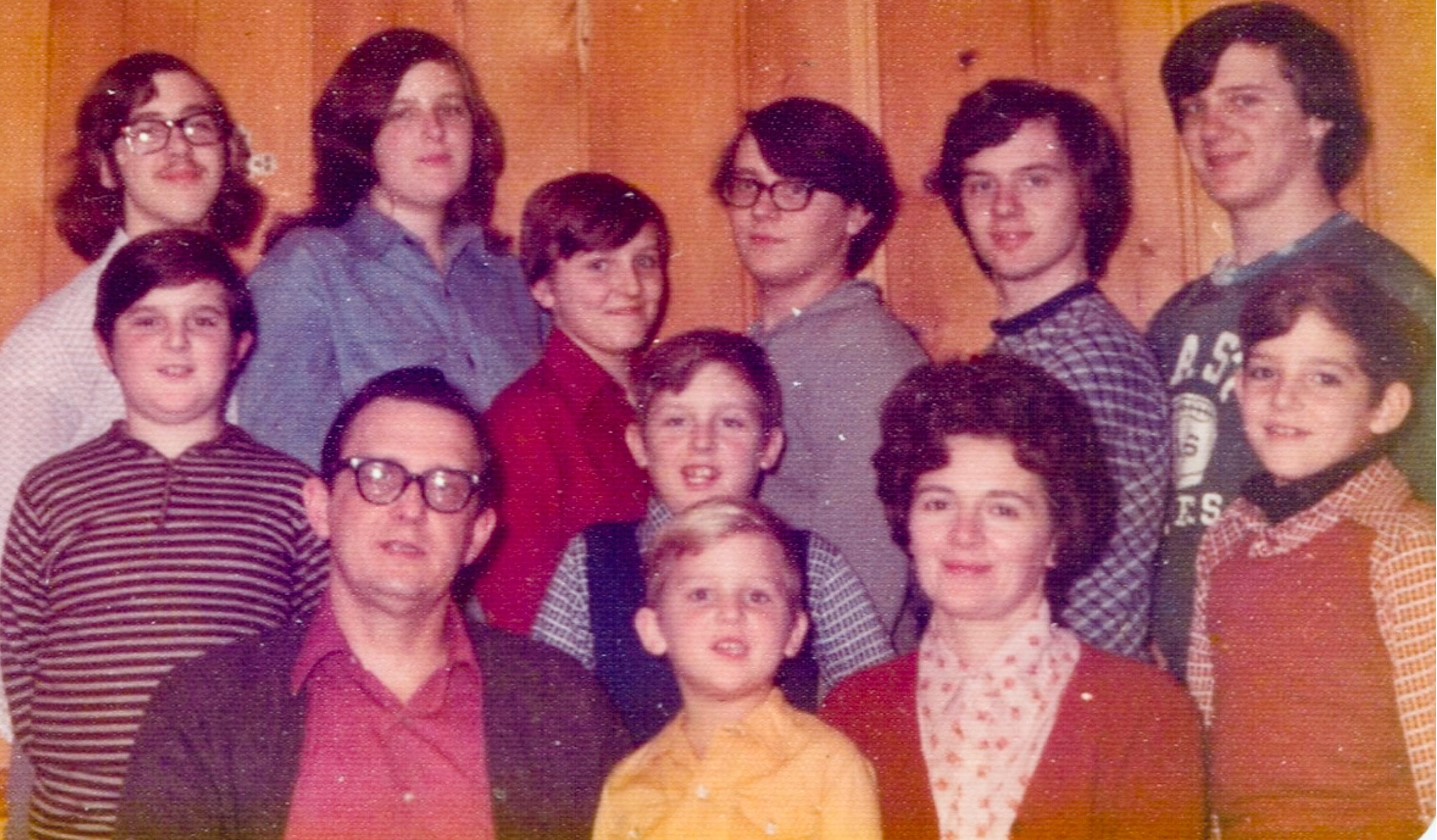
The size of our house in Kensington, at 10003 Thornwood Road in the Parkwood subdivision, did not quite live up to expectations. Our family of twelve was moving into a house perfectly sized for a family of four. Soon there would be ten people sleeping in that house every night. When Dan and Steve came home for summer from Chicago, where each had already started college, it grew to twelve. When Grandma Durbin visited, thirteen.
Mom and Dad had simply bought their retirement house a few decades early, figuring every couple of years a kid would move out and free up space. Barb was just out of high school when we moved to Maryland, and it wasn’t long before she moved into an apartment with some friends to start her adult life. That left seven Durbin kids at home: Bob, Ed, Bill, Mike, Marty, Ken, and Dave.
Then as now, real estate was far more expensive in the Washington, DC, area than in southern Illinois, so it’s no surprise our new house was smaller. Mom and Dad could have more easily afforded a larger house in a distant suburb, but they wanted us to be in Montgomery County. It was close to all the Washington sites and had some of the best public schools in the country, so they stretched their dollars to put us there.
A house in Virginia was out. After crossing the Mississippi River to get to work all those years back in Illinois, Dad didn’t want to have to cross the Potomac to get to the U.S. Naval Observatory, where DMA was located, from a house in Virginia.
As it turned out, Dad would in fact drive across the Potomac all the time to get to work, though we didn’t know it at the time. His job regularly took him to CIA headquarters in Langley, Virginia, hidden in those days behind a sign on the GW Parkway for the “Fairbanks Highway Research Center.” As did the ACIC in St. Louis, the DMA did top-secret stuff in Washington, so none of us, including Mom, had a clue what he did at work.
Next: 25. Kensington
Previous: 23. Civil Rights
 Michael Durbin